

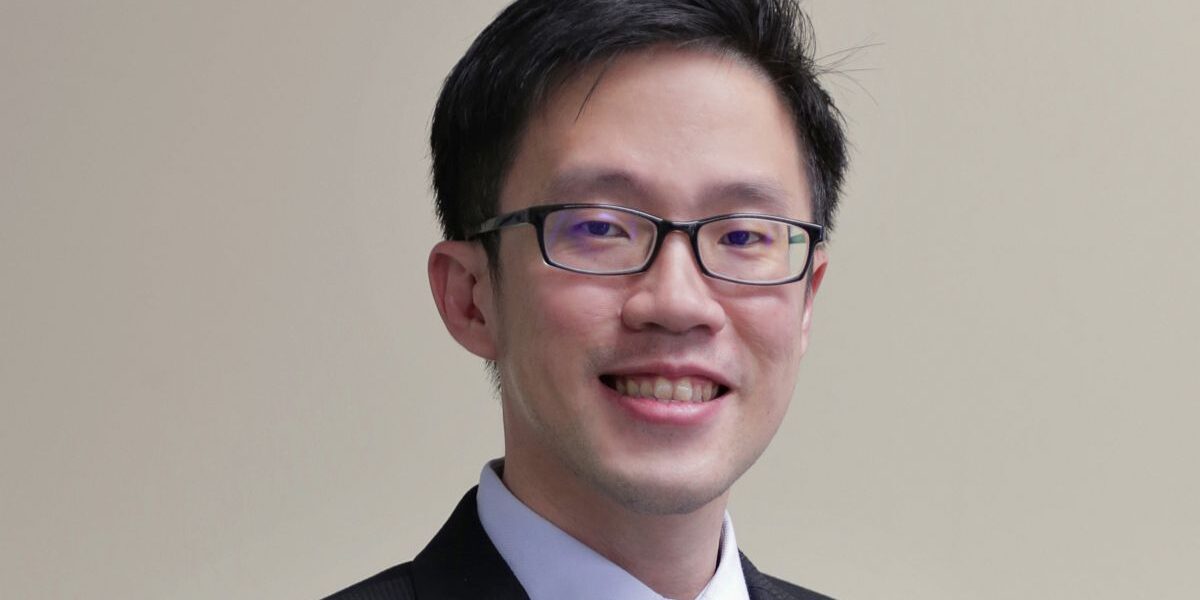
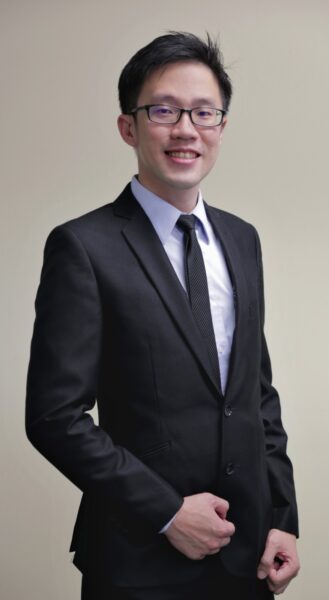
Name: Associate Professor Dr Lim Ren Jye
Cohort: ME299
Current Role: Medical Director and Integrative Medical Consultant
Institution: Sunway TCM Centre
Location: Malaysia
“We are treating a person, not just a disease.”
For Associate Professor Dr Lim Ren Jye, this is more than a statement about patient care. It captures much of what has shaped his professional journey and his interest in bringing different medical disciplines together.
As a medical student at IMU, he could not have predicted that his career would eventually take him into Traditional Chinese Medicine (TCM), healthcare policy and integrative oncology. Like many medical graduates, he initially expected to follow a more conventional career pathway.
But he had always been curious about different approaches to healthcare. That curiosity eventually led him to China, where he pursued postgraduate training in TCM and opened the door to a career that would bring together two different medical traditions.
It was not simply a matter of learning another set of treatments. He wanted to understand TCM from its foundations, including its theories, diagnostic principles and clinical applications. He believed that if the two approaches were to work together meaningfully, he needed to understand both properly.
Today, Dr Lim’s work reflects that conviction. Having contributed to the development of TCM policy and services in Malaysia, spent several years establishing integrative services within a national cancer institution, and subsequently taken on leadership in clinical practice, he now serves as Medical Director and Integrative Medicine Consultant at Sunway TCM Centre.
His career has been shaped by a consistent question: how can different areas of medical knowledge be brought together responsibly to improve the care patients receive?
The Curiosity That Took Him Beyond Conventional Medicine
Dr Lim’s time at IMU provided the foundation for the way he approaches medicine today.
He recalls that his medical education taught him to think critically, approach clinical problems systematically and appreciate the importance of evidence-based practice. These were lessons that would become particularly valuable as he moved into a field that required him to consider different medical traditions and evaluate their respective roles.
At the time, however, he had no clear idea that his career would take such an unconventional direction.
His interest in exploring different approaches to healthcare developed gradually. Rather than limiting himself to what he had initially been trained in, he wanted to understand how other medical systems viewed illness, diagnosis and treatment.
This curiosity eventually brought him to Shanghai University of Traditional Chinese Medicine (SHUTCM) in 2008, where he undertook postgraduate training in Integrated Chinese and Western Medicine, specialising in clinical oncology.
It was a significant decision, requiring him to step into an unfamiliar academic and clinical environment.
He was fortunate to receive support through a Malaysian Ministry of Health scholarship and the Shanghai Municipal Scholarship, which enabled him to pursue his studies in China. He completed his master’s training in 2011.
The transition was not without its challenges. He had to adapt to a different education system, language and clinical environment while developing an understanding of a medical tradition that had its own principles and methods of practice.
But the experience gave him something he had been looking for: a deeper understanding of how different medical systems approach health and illness.
His academic journey continued at Nanjing University of Chinese Medicine, where he pursued a PhD in TCM (Internal Medicine), completing it in 2018.
Through these experiences, he came to appreciate that different medical traditions have their own strengths. The challenge, as he saw it, was not to determine which system was superior, but to understand where each might have a meaningful and appropriate role in patient care.
Helping Shape the Policy Landscape for T&CM in Malaysia
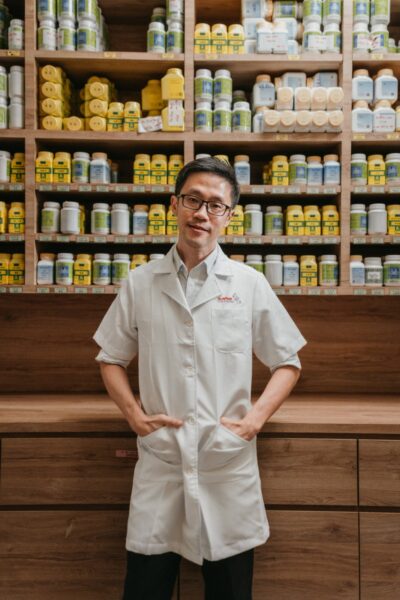
After completing his postgraduate training in Shanghai, Dr Lim returned to Malaysia in 2011 and joined the Ministry of Health’s Traditional and Complementary Medicine Division.
He was appointed Head of the Policy and Development Department, a role that introduced him to a different dimension of healthcare. His responsibilities extended beyond individual clinical practice to areas such as policy development, strategic planning and international collaboration for the T&CM sector.
It was an important period in his professional development because it allowed him to contribute to the broader direction of T&CM in Malaysia. Among the national initiatives he was involved in were the development of the National Traditional and Complementary Medicine Blueprint and contributions to the National Cancer Control Blueprint. These initiatives formed part of wider efforts to establish a more structured approach to the development of T&CM and consider its appropriate place within the country’s healthcare landscape.
His experience at the Ministry of Health gave him a much clearer understanding of what it takes to develop a healthcare discipline beyond the capabilities of individual practitioners. Having knowledge of a particular medical system and being able to practise it are important, but they are not enough to build a sustainable healthcare sector. There must also be appropriate policies, regulatory frameworks, professional standards, institutional support and public confidence.
For T&CM, these considerations were particularly important. As public interest in traditional and complementary treatments continued, there was a need to ensure that professional practice was supported by proper training, accountability and safeguards for patients.
Dr Lim’s involvement in policy and regulatory development also gave him an opportunity to contribute to the wider professionalisation of T&CM in Malaysia. One significant milestone in this broader journey was the Traditional and Complementary Medicine Act 2016 (Act 775), which established a regulatory framework for the sector.
He is careful not to attribute the progress of T&CM in Malaysia to any one individual. It has involved the contributions of many dedicated practitioners, policymakers, professionals and institutions over the years. Nevertheless, he is grateful to have been part of the development process.
For him, regulation is not simply about putting rules in place. It is about building public trust. Patients need to have confidence that the care they receive is appropriate, that practitioners meet recognised professional standards and that their safety remains a priority.
This experience also changed how he viewed healthcare development. He began to appreciate that meaningful progress requires people from different backgrounds and areas of expertise to work together, with a shared understanding of what responsible healthcare should look like.
The work at the Ministry of Health would prove to be an important foundation for the next chapter of his career, when he was given the opportunity to take some of these broader ideas and translate them into actual clinical services.
From Policy to Practice: Establishing TCM Services at the National Cancer Institute
In 2013, Dr Lim moved to the National Cancer Institute (Institut Kanser Negara, IKN) in Putrajaya, where he headed the Traditional and Complementary Medicine Department until 2019.
This became one of the most significant chapters of his professional journey.
Having previously worked on policy development and strategic planning at the Ministry of Health, he now had the opportunity to contribute to the establishment and development of TCM services within a national cancer institution.
It was a different responsibility, with a much stronger focus on clinical service development, research, academic activities and collaboration with other healthcare professionals.
One of the department’s key initiatives was the introduction of TCM services within the National Cancer Institute. Acupuncture services were introduced in September 2013, followed by herbal medicine services in April 2014.
The objective was to explore how TCM could be incorporated responsibly into conventional oncology care, particularly in areas such as supportive cancer care, symptom management and improving patients’ quality of life.
Establishing these services within a national cancer institution was a significant undertaking. It required more than introducing treatments or making services available to patients. There was a need to establish appropriate clinical processes, ensure patient safety, consider available research evidence and develop working relationships with conventional medical specialists.
This was particularly important in oncology, where patients often undergo complex treatment programmes involving surgery, chemotherapy, radiotherapy, targeted therapy or immunotherapy.
Dr Lim recognised that any complementary intervention had to be carefully considered within the patient’s overall treatment plan. Not every traditional treatment would be suitable for every patient, and potential interactions between herbal medicines and conventional cancer treatments had to be taken seriously.
For him, the purpose was never to position TCM as an alternative to established cancer treatment or to suggest that patients should choose one medical system over another.
Rather, the intention was to explore where TCM might have an appropriate supportive role alongside conventional oncology care, with proper clinical governance and the patient’s wellbeing guiding decisions.
The experience brought together several aspects of his earlier professional development: the understanding of TCM he had gained through postgraduate training in China, his experience in healthcare policy and regulation at the Ministry of Health, and his interest in research and evidence-based practice.
It also reinforced the importance of multidisciplinary collaboration. Integrating different approaches to healthcare requires mutual understanding, open communication and a willingness among professionals to work together while respecting the standards and responsibilities of their respective disciplines.
Looking back, his work at the National Cancer Institute represented an important opportunity to contribute not only through clinical practice, but also to the practical development of integrative healthcare within Malaysia’s public healthcare system.
It was a particularly meaningful experience because it demonstrated how ideas developed at a policy level could be translated into actual services within a healthcare institution, while maintaining patient safety and professional accountability.
Safeguarding Medicine Quality Beyond Manufacturing
An area that has featured prominently in Ariff’s professional work is the quality and integrity of medicines during storage, transportation and distribution. His name is included in the editorial committee of Malaysia’s Good Distribution Practice guideline, reflecting his involvement in work relating to pharmaceutical distribution standards.
While medicine quality is often associated with the manufacturing process, Ariff highlights that the conditions under which medicines are subsequently stored, transported and distributed are equally important.
Factors such as ambient temperature and relative humidity can affect the quality of pharmaceutical products. For medicines that require controlled temperatures, maintaining the integrity of the cold chain throughout transportation and distribution is particularly important.
These considerations are central to Good Distribution Practice, which focuses on ensuring that medicines are handled and distributed appropriately so that their quality is maintained until they reach the end user.
It is a responsibility that may not always be apparent to patients, but it plays an important role in safeguarding the medicines they depend on.
Through his work and involvement in regulatory activities, Ariff has developed a deeper appreciation of the systems and standards needed to protect medicine quality beyond the manufacturing stage.
Why Research and Regulation Matter
Throughout his career, Dr Lim has maintained that research is essential to the responsible development of integrative medicine.
Traditional treatments may have long histories of use, but historical use alone should not automatically be treated as proof of clinical effectiveness.
At the same time, he believes traditional knowledge should not be dismissed simply because it comes from a different medical tradition.
The challenge is to evaluate it properly.
His postgraduate research experiences in Shanghai and Nanjing, together with leadership training at Harvard Medical School, strengthened his interest in clinical research and the scientific evaluation of traditional treatments.
He believes researchers need to ask practical questions. Which patients may benefit from a particular intervention? What outcomes are we trying to improve? Is the treatment safe? And how can its effectiveness be measured?
These questions are important because the ultimate purpose of research is not simply to demonstrate that an intervention produces a particular result. It is to understand whether that result has clinical meaning and whether the treatment is appropriate for the patients who may receive it.
Dr Lim advocates for research methodologies that are rigorous while taking into account the distinctive characteristics of traditional medicine.
For integrative medicine to develop responsibly, it needs evidence, appropriate clinical governance and professionals who understand both the traditional approaches they practise and the requirements of modern healthcare.
It is a position that reflects his wider belief that clinical practice, research and regulation should develop alongside one another.
Continuing the Work at Sunway TCM Centre
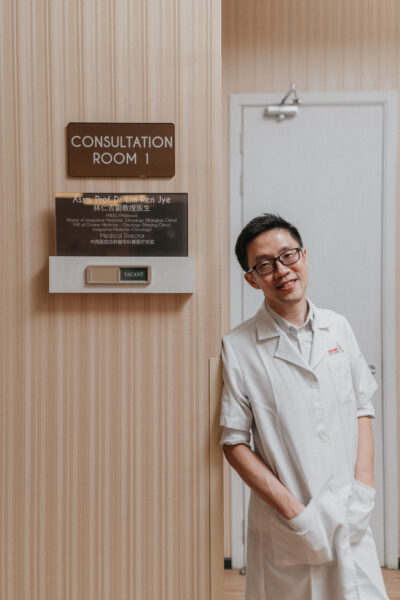
After years of involvement in healthcare policy, oncology services and academic development, Dr Lim’s career has brought him to his current role as Medical Director and Integrative Medicine Consultant at Sunway TCM Centre, which is affiliated with Sunway Healthcare Group Malaysia.
His focus is on developing a more structured and clinically integrated approach to TCM services.
Drawing on his experiences at the Ministry of Health and National Cancer Institute, as well as his postgraduate training, he hopes to build a centre where TCM practitioners can work alongside other healthcare professionals.
Areas such as integrative oncology, pain management and supportive care are among the areas he hopes to develop further.
For him, the work goes beyond establishing clinical services. It also involves building an environment where practitioners have the appropriate training, professional support and understanding of modern healthcare practices.
He believes the next generation of TCM practitioners must be competent in their own discipline while also understanding clinical research, professional ethics, patient safety and multidisciplinary collaboration.
This is particularly important as patients become increasingly interested in different healthcare options and seek guidance on how traditional and conventional treatments might fit into their overall care.
He hopes that Sunway TCM Centre can contribute to a healthcare environment where patients receive appropriate care without feeling that they have to choose between different medical disciplines.
Remaining Connected to Research and Education
Despite his professional responsibilities, Dr Lim has maintained his involvement in academic development.
He currently holds an appointment as Visiting Associate Professor at Shanghai University of Traditional Chinese Medicine and serves as a Visiting Lecturer at IMU.
These academic connections allow him to remain involved in teaching, share professional experiences and encourage collaboration between clinical practice and research.
His continued connection with IMU is particularly meaningful given that it was where his medical journey began.
He recognises the importance of preparing young healthcare professionals to work in an increasingly complex environment, where traditional boundaries between disciplines may become less distinct.
Medical students and young practitioners today are also entering a profession that is being reshaped by artificial intelligence, digital health, precision medicine and new treatment technologies.
Dr Lim believes that access to information is no longer necessarily the biggest challenge. The more important question is whether healthcare professionals know how to interpret that information, evaluate its reliability and apply it appropriately.
Artificial intelligence can assist with analysing data and retrieving information, but clinical judgement requires much more. It involves experience, critical thinking, communication and an understanding of the person receiving care.
He is also mindful of the possibility that excessive dependence on technology could weaken independent clinical reasoning among younger practitioners.
His advice is to embrace technological developments while continuing to develop the ability to think independently.
Medicine will keep changing, but the responsibility towards patients should never change.
A Career That Was Never Mapped Out From the Beginning
Looking back, Dr Lim’s professional journey has taken him through several areas of healthcare that he may not have imagined when he was first studying medicine at IMU.
From postgraduate training in Shanghai and Nanjing to healthcare policy at the Ministry of Health, the establishment of TCM services at the National Cancer Institute and his current leadership role at Sunway TCM Centre, each chapter has brought a different set of challenges and opportunities.
Yet, there is a common thread running through all of them: a willingness to explore, learn and contribute beyond the boundaries of his original training.
His advice to current IMU students and young graduates reflects this experience.
He encourages them not to feel that their first qualification must determine the direction of their entire career. Medicine offers opportunities across clinical practice, research, healthcare management, public health and policy development, as well as areas that may not yet have fully emerged.
He believes in exploring new possibilities but also emphasises the importance of building a strong professional foundation, maintaining integrity and continuing to learn.
His own career is an example of how opportunities can develop in ways that are difficult to anticipate. Decisions made at different stages; the people encountered along the way and the challenges taken on can gradually shape a professional direction.
As he reflects on his time at IMU, he remains grateful for the foundation it provided.
A medical degree, he believes, is not the end of learning. It is the beginning of a much longer journey of discovery, adaptation and service.
And perhaps his most important message to the next generation is this:
“Your first qualification gives you a foundation, not a fixed destination.”
For Dr Lim, that is what a career in healthcare should allow: the opportunity to continue learning, explore different ways of contributing and remain guided by the responsibility to serve patients with integrity.
His journey is a reminder that professional growth does not always mean following a straight path. Sometimes, it means being willing to look beyond what you already know, understand different perspectives and find ways to bring them together for the benefit of the people who matter most: the patients.