

Name: Associate Professor Renly Lim
Cohort: MP107
Institution: Adelaide University
Location: Australia
Associate Professor Renly Lim did not grow up knowing she wanted to become a pharmacist. In fact, her original plan was quite different.
During high school, she was drawn to accounting and thought that was where her future would lie. Having achieved good results in her SPM examinations, she remembers her mother suggesting that she consider Medicine instead. But there was one problem: Renly was not particularly keen on dealing with blood.
Pharmacy seemed like a more appealing alternative. She enjoyed Biology and Chemistry, and it offered the opportunity to build a career in healthcare without necessarily following the path of a doctor.
It was, by her own admission, a decision made without knowing just how far the profession could take her.
Today, Renly is an academic and researcher at Adelaide University, where she has been based since 2016. Her work spans clinical trials, health services research and clinical practice-based research, with a particular interest in improving the way medicines are used.
Her career has also taken her beyond traditional academic research. She has held an international leadership position within the pharmacy profession, contributed to healthcare discussions across different countries and written children’s books to introduce young readers to the importance of medicine safety.
In many ways, her career has become an exploration of the many ways pharmacy knowledge can be put to use.
A Career Direction She Never Quite Expected
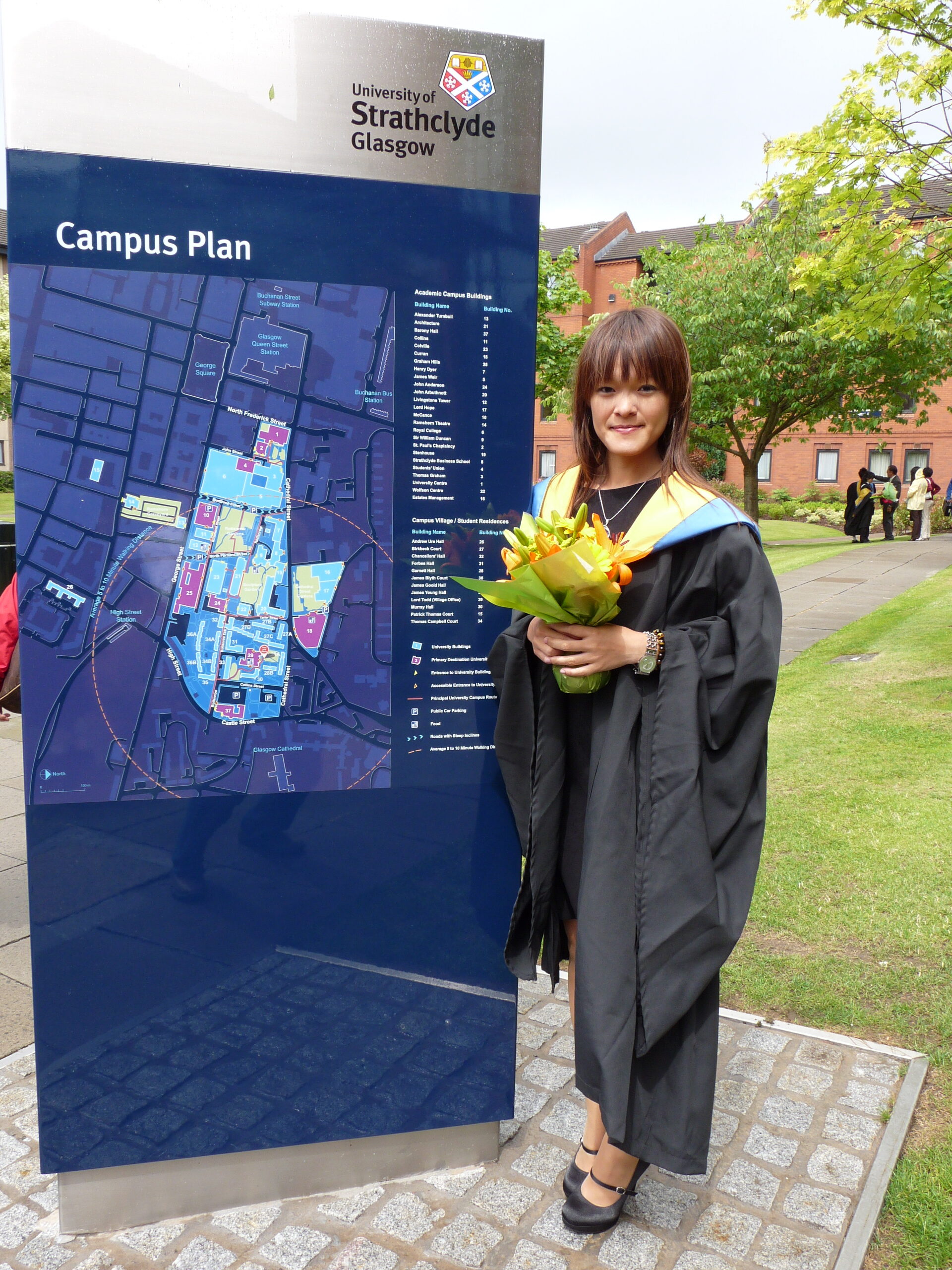
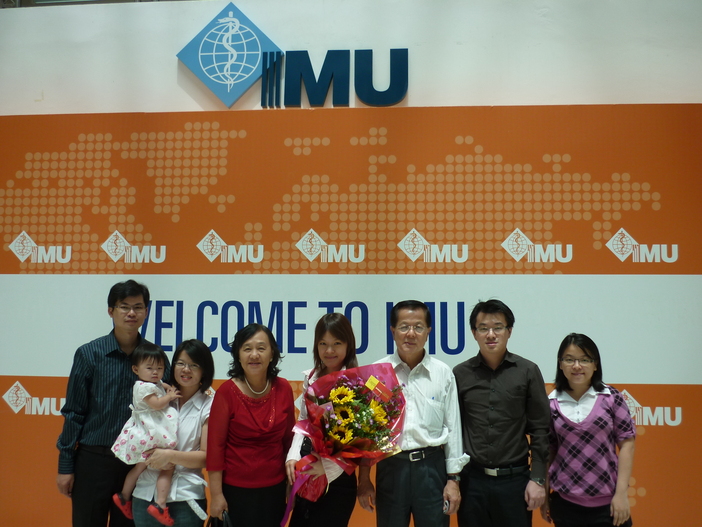
Renly completed her Master of Pharmacy through the IMU-University of Strathclyde twinning programme. During her final year at IMU, she undertook a research project under the supervision of Dr Christine Dufès, focusing on cancer drug formulation.
Although she enjoyed the experience, she came away with the impression that laboratory research was probably not for her. At the time, an academic career was certainly not something she had in mind. After graduating, she began practising at Hospital Raja Permaisuri Bainun (HRPB) in Ipoh, where she spent two years developing her experience as a pharmacist.
It was also during her time at HRPB that she encountered someone who would influence the direction of her career. Her then-boyfriend, who is now her husband, was considering pursuing a Master’s degree at Universiti Sains Malaysia (USM). They arranged to meet Professor Yuen Kah Hay, and the conversation turned out to be an important one for Renly.
Listening to Professor Yuen speak about his research and experiences as an academic opened her eyes to a different side of research. At the time, he was leading a team conducting clinical trials investigating the effects of tocotrienol, a form of vitamin E, across various health conditions.
It was an unfamiliar perspective for Renly. She had previously associated research primarily with laboratory work, but the conversation helped her understand that there were many other ways to conduct research and contribute to healthcare.
For the first time, she could see herself pursuing an academic path.
Inspired by the possibilities, she decided to undertake a PhD at USM between 2013 and 2016. That decision would become one of the most important turning points in her professional life.
When Research Moves Beyond the Academic World
During her PhD, Renly conducted a randomised controlled trial evaluating a non-invasive medical device for women with stress urinary incontinence. The research focused on a condition that can have a considerable impact on women’s everyday lives, yet is not always openly discussed.
Renly’s research explored the use of a non-invasive medical device for the treatment of stress urinary incontinence.
The findings were particularly significant. According to Renly, the results changed clinical practice for women attending the hospital where the study was conducted and subsequently influenced the management of stress urinary incontinence more broadly. They also informed treatment guidelines in countries including the United Kingdom and the United States.
It was through this experience that she began to appreciate the potential reach of research.
What had started as a doctoral project was contributing to discussions and decisions that extended well beyond the original research setting. It showed her that good research could do more than generate publications or advance an academic career; it could influence how healthcare professionals approach a condition and the treatment options made available to patients.
That experience remains an important part of how she views her work today.
In 2016, following the completion of her PhD, Renly received several employment offers from institutions in Malaysia, Singapore, Thailand and Australia. She eventually chose to join the University of South Australia, where she became part of the Quality Use of Medicines and Pharmacy Research Centre.
Understanding Healthcare Through the Eyes of the People It Serves
Research can sometimes become very focused on the questions academics and healthcare professionals want to investigate. But Renly’s experiences working with different communities have reinforced the importance of understanding what people actually need before deciding what solutions to offer.
Through her involvement in community engagement work in Cambodia, as well as research involving different healthcare environments in Australia, she has come to appreciate that people from very different backgrounds often want the same basic things: to be treated with respect, to have a say in decisions about their health and to receive good-quality healthcare.
One experience in particular has stayed with her.
In recent years, she has been involved in research within residential aged care facilities in Australia. During one conversation, an aged care director made an observation that struck a chord with her:
“These days, most companies come to us trying to offer us a solution to a problem that we don’t have.”
Researchers may enter a setting with a particular problem in mind and a solution they believe will make a difference. But without first speaking to the people who actually use the services, there is a risk of overlooking the challenges that matter most to them.
For Renly, these conversations have reinforced the importance of listening to local communities, understanding their circumstances and involving them in the development of research and healthcare interventions.
Working at the Quality Use of Medicines and Pharmacy Research Centre has given her the opportunity to learn from Professor Libby Roughead, whose work in translating research into policy and practice is recognised nationally and internationally.
The Centre’s longstanding relationships with government agencies, consumer organisations and other stakeholders have helped provide a strong foundation for collaborative research.
Renly has adopted a similar approach in her own work: engaging the people who will ultimately use the research, building relationships with relevant stakeholders and ensuring that the evidence generated is meaningful to the decisions they need to make.
For her, translating research into practice is not something that should be left until a project is completed. It needs to be considered from the very beginning.
Taking Leadership Beyond Borders
Alongside her academic and research responsibilities, Renly has also contributed to the international pharmacy community.
She previously served as President of the International Pharmaceutical Federation’s Young Pharmacists Group (FIP YPG), an experience she describes as probably the toughest professional role she has undertaken.
The timing made it particularly demanding.
She had just become a first-time mother, and the role coincided with the COVID-19 pandemic. Based in Australia, she also had to navigate time differences when organising and attending meetings with colleagues from across the world.
It was an experience that tested her ability to balance professional responsibilities with the demands of family life, while leading a diverse international group through an unusually challenging period.
But it also taught her some important lessons about leadership.
For Renly, leadership is not about having all the answers or trying to do everything yourself. It is about bringing people together around a shared purpose, recognising their individual strengths and creating opportunities for them to contribute.
She believes even the best ideas have little value without the support and participation of the people around them.
How a Bedtime Story Became a Pharmacy Adventure
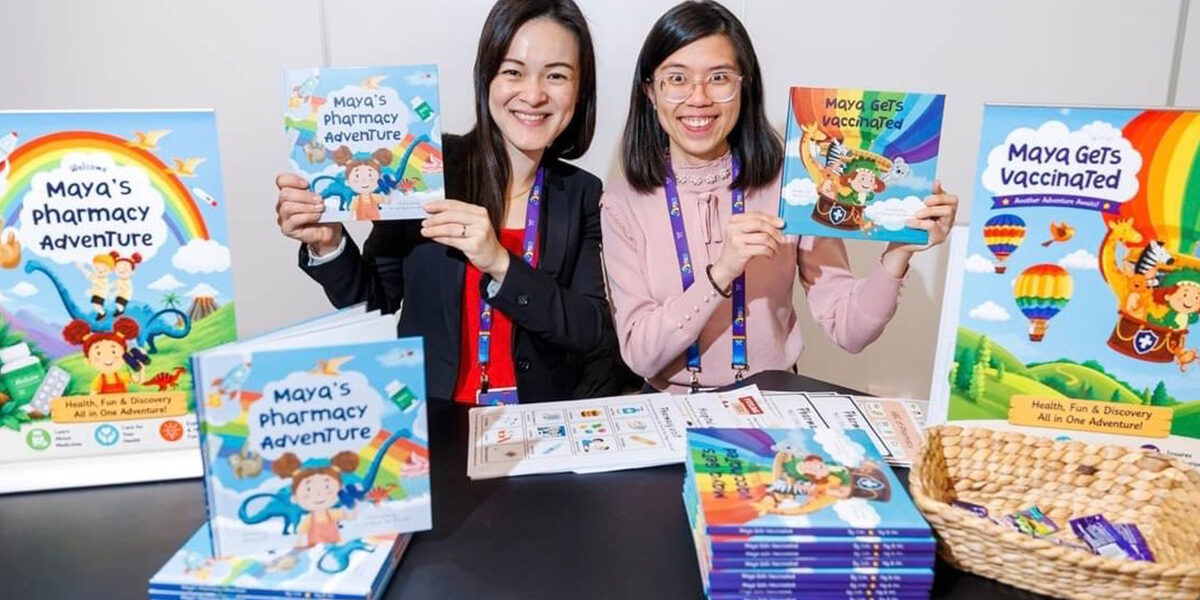
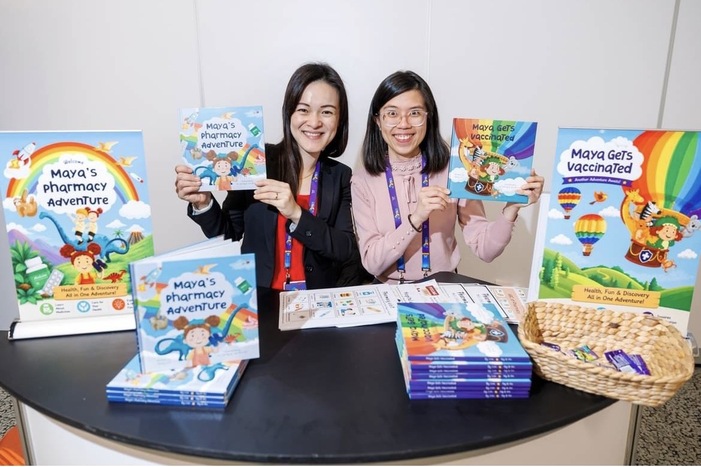
Perhaps one of the most charming and unexpected parts of Renly’s professional journey is her work as a children’s picture book author.
Her first book, Maya’s Pharmacy Adventure, came about through a rather ordinary moment at home.
After becoming a mother, Renly began reading regularly to her toddler, Rena. They would visit the library and borrow books on different subjects, enjoying the opportunity to explore new stories together.
One evening, when Rena was around three years old, Renly was reading her a book about different occupations. The book featured doctors, nurses, firefighters, construction workers, hairdressers and many other professions.
There was just one occupation missing: pharmacist.
It made Renly wonder why pharmacy was so rarely represented in children’s books. She began searching for age-appropriate stories about pharmacists and medicine safety but struggled to find anything that suited what she had in mind.
The idea stayed with her, particularly as her research work had also brought her into contact with older adults in residential aged care.
Through these interactions, she had heard many stories from people in their seventies, eighties and nineties who wished they had understood more about their medicines earlier in life.
She began to see an opportunity to introduce medicine safety to children at a much younger age. It was also a way for her own children to understand what their mother did for a living.
The idea eventually gained momentum following an email from her colleague, Professor Dot Dumuid.
Professor Dot shared a screenshot of an initiative by two undergraduate students at the university who had created a colouring-in book about nuclear medicine. Renly had previously mentioned her interest in writing a children’s book, and the students’ work encouraged her to take the next step.
Renly reached out to them, and they kindly agreed to meet with her and share their experiences.
That conversation gave her the encouragement she needed to begin.
And so, Maya’s Pharmacy Adventure was born.
Renly subsequently published a second picture book, Maya Gets Vaccinated, and already has plans for a third.
When a Community Talk Makes a Difference
Renly’s interest in public education extends beyond her children’s books.
For approximately seven years, she has received annual invitations from Australia’s University of the Third Age (U3A), a national organisation comprising retirees interested in educational and leisure activities, to give talks about medicine safety.
Her audiences are predominantly older adults, many of whom take multiple medications and have their own experiences and questions about managing their health.
She describes the sessions with a good sense of humour. There are always people taking photographs of her slides, writing notes and nodding enthusiastically throughout the presentation. There are occasionally a few who struggle to stay awake too, particularly during a two-hour talk with only a short break!
But it is the conversations and actions that follow these sessions that she finds most rewarding.
During one recent talk, a couple were prompted to approach their general practitioner and request a referral for a Home Medicines Review with a pharmacist.
For Renly, that was a tangible example of what public education can achieve.
The purpose of sharing healthcare knowledge is not simply to provide people with more information. It is to help them feel confident enough to ask questions, participate in decisions about their health and take a more active role in managing their medicines.
A Message to the Next Generation: Take Ownership of Your Journey
When asked what advice she would give to current IMU students and young alumni interested in research, academia or other ways of contributing to healthcare, Renly offers a rather direct response: take ownership of your own life and career.
She believes that people should not feel they have to remain in a professional situation simply because it is familiar or because they have already invested years in it.
If they no longer find their work fulfilling or feel that they have become stuck, she encourages them to take steps towards changing something. This could mean exploring new responsibilities, finding an area of work that better suits their interests or, when necessary, considering a different workplace.
She encourages young pharmacists to remain curious, keep developing their knowledge and stay open to new technology, including artificial intelligence. While AI can be useful in supporting research and everyday work, she believes it cannot replace genuine learning, critical thinking or the effort required to develop one’s own capabilities.
Her final advice captures her outlook rather well:
“AI is replaceable, make yourself irreplaceable.”
It is a fitting message from someone whose career has taken her from pharmacy practice in Ipoh to research and academia in Australia, international professional leadership and children’s health education.
For Renly, the most interesting opportunities have often emerged from being willing to explore something she had not originally planned to pursue. She did not set out to become an academic, lead an international professional group or write children’s books about pharmacy. Yet each of these experiences has allowed her to contribute to healthcare in a different way.
And perhaps that is what makes her story particularly relevant to the next generation of IMU pharmacists: a career does not have to follow a predetermined path. Sometimes, the most rewarding directions are the ones you discover along the way.