

Name: Mariam Yu
Cohort: NU111
Location: Singapore
Mariam Yu has always known that she wanted to work in healthcare. After finishing high school, she considered two possible paths: Medicine and Nursing. Practical considerations, including the cost of education and her parents’ advice, eventually led her towards Nursing at IMU.
It was not a decision she made without careful thought. Mariam remembers visiting different universities, researching their programmes and comparing their curricula before deciding that IMU offered the best fit.
Looking back, she has no regrets.
The workload initially came as something of a shock. Nursing was demanding, both academically and practically, and there was plenty to master. But with the benefit of hindsight, she understands why the programme was structured that way. The intensity of her training helped prepare her for the responsibilities she would eventually encounter in clinical practice.
Her journey would take her from Malaysia to Singapore, where she began her nursing career and gradually worked towards one particular ambition: joining an intensive care unit.
Getting there, however, took more determination than she initially expected.
An Early Glimpse of Nursing in Singapore
Mariam’s first experience of Singapore’s healthcare environment came before she graduated from IMU. During her nursing studies, she had the opportunity to undertake a four-week clinical elective at Tan Tock Seng Hospital, where she was attached to the Neurological Intensive Care Unit.
For her, it was an eye-opening experience.
She was introduced to a different healthcare system, a new hospital environment and a nursing team made up of people from diverse cultural and professional backgrounds. More importantly, it gave her a clearer understanding of how much successful patient care depends on collaboration.
She saw how nurses, doctors and other healthcare professionals worked together, each contributing to a patient’s recovery. It also helped her recognise just how important nurses are in monitoring a patient’s progress and supporting the wider treatment team.
What struck her was not only the clinical environment but also the people. She found the staff friendly and willing to teach and felt that every day offered something new to learn. She was equally impressed by the cultural diversity within the healthcare workforce. Nurses from different backgrounds worked alongside one another, and differences in culture did not prevent them from delivering effective patient care.
That experience left her with a positive impression of nursing in Singapore and gave her an opportunity to see what working in another healthcare environment could look like.
Taking the First Steps as a Practising Nurse
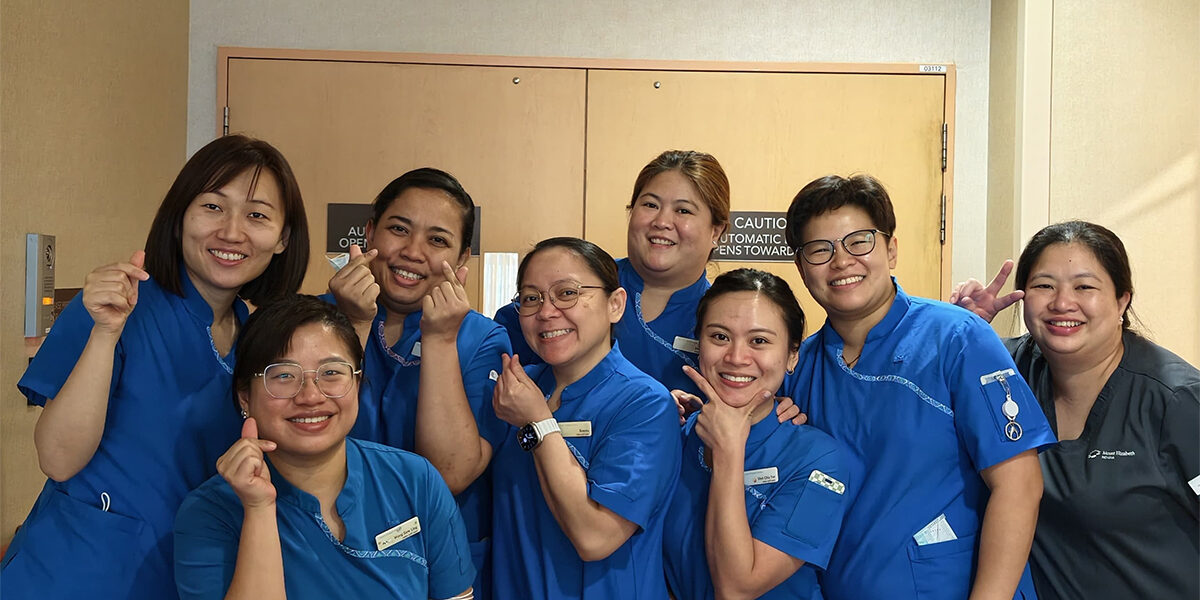
After graduating from IMU, Mariam began her professional journey at Mount Elizabeth Novena Hospital in Singapore, starting in the medical-surgical unit.
The transition from student to practising nurse was not without its challenges.
During her clinical placements at IMU, there had always been clinical instructors and supervisors around to guide her. Suddenly, she was working in an environment where she had to take greater responsibility for her own decisions and actions. The learning curve was significant, but it also helped her become more independent and confident in her professional judgement.
She soon realised that while the hospital setting might have been different from what she had experienced during her elective at Tan Tock Seng Hospital, the fundamental responsibilities of nursing remained the same. Whether working in a private or public hospital, the priority was still to provide appropriate care and attend to the needs of each patient.
Her time in the medical-surgical unit also helped her build a foundation of clinical experience. But Mariam had another goal in mind. Since her days at IMU, she had been interested in intensive care nursing. She enjoyed the complexity of the cases, the clinical challenges and the opportunity to develop a deeper understanding of critically ill patients.
She knew that moving into an ICU would require additional preparation and a willingness to take on a demanding learning process. Nevertheless, she was determined to pursue it.
The ICU Goal She Refused to Give Up On
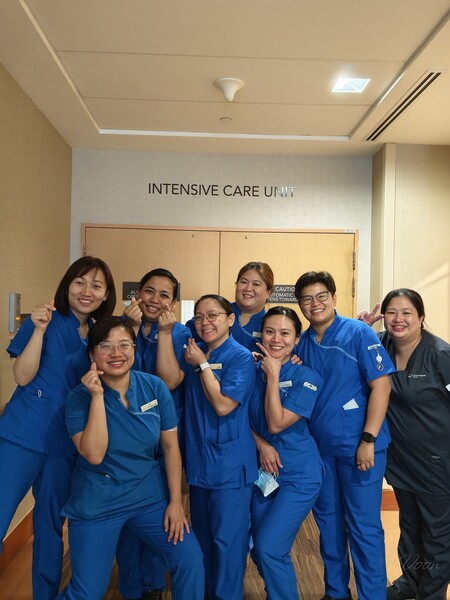
One of the most meaningful milestones in Mariam’s career was eventually securing a transfer to the intensive care unit.
It was not something that happened immediately.
After spending two years in the medical-surgical unit, she requested a transfer but was initially turned down. For many people, such a response might have been discouraging enough to reconsider the idea.
Mariam, however, was not ready to give up.
She continued studying, sought exposure to different cases and worked on building the experience she needed. She kept expressing her interest in joining the ICU and continued working towards the opportunity.
Eventually, her request was granted.
For Mariam, the transfer represented much more than a change of department. It was the fulfilment of an ambition she had carried since her time as a nursing student.
She particularly enjoys the complexity of intensive care, where nurses encounter a wide range of cases and need to remain attentive to changes in patients’ conditions. It is a demanding environment that requires sound clinical judgement, technical competence and the ability to work closely with other healthcare professionals.
Getting there reinforced an important lesson for her: sometimes, reaching a professional goal takes longer than expected. A setback does not necessarily mean the opportunity is gone. It may simply mean there is more to learn and more preparation to do before the next attempt.
Her experience is a good example of what perseverance looks like in practice. She knew what she wanted, recognised that she still had areas to develop and was prepared to put in the work until she got there.
Learning to Work Across Cultures
Working in Singapore has also introduced Mariam to a healthcare environment that is highly diverse, both in its workforce and among the patients it serves.
She has worked alongside colleagues and cared for patients from different backgrounds, including people from China, Myanmar, the Philippines and India. These experiences have made her more conscious of how culture can influence communication, expectations and the way people approach healthcare.
She has learnt that something she considers important may not necessarily carry the same meaning for another person, and vice versa.
This has encouraged her to be more mindful in the way she communicates with both colleagues and patients. Rather than assuming that everyone sees things from the same perspective, she has learnt to listen, understand and respect differences.
For Mariam, a multicultural workplace is not simply about working alongside people from different nationalities. It is about recognising that everyone has something valuable to contribute.
She believes that effective teamwork comes from creating an environment in which people feel heard and respected. When colleagues are comfortable sharing their observations and perspectives, they are better able to work towards a common goal.
It is an approach that has helped her become a more understanding communicator and a more supportive member of the healthcare team.
She also appreciates how Singapore’s healthcare environment has embraced technological advancements. Compared with what she experienced during her training in Malaysia, hospitals in Singapore have made greater investments in technology, efficiency and artificial intelligence.
Patients, too, tend to be better informed about their health and more aware of the choices available to them.
These differences have encouraged her to remain adaptable and recognise that nurses must continue developing their skills as healthcare systems evolve.
Technology Can Help, but Patients Still Need People
With increasing investments in clinical technology and monitoring systems, nurses have more tools than ever to support their daily work.
Mariam believes these tools should be embraced, particularly when they help improve efficiency and allow nurses to manage their responsibilities more effectively. But she also feels strongly that technology should not come at the expense of personal interaction. In her view, one of the best ways nurses can use technology is to allow it to make everyday tasks more efficient, freeing up more time to understand their patients and attend to their individual needs.
She has learnt that even seemingly small gestures can make a considerable difference to how patients experience their care.
Taking a little extra time to listen to someone’s concerns, understand their background or simply make them feel that they are being heard can provide a more personal touch to nursing. Patients want to know that their concerns matter to the people looking after them.
For Mariam, this is an important reminder that while technology can support clinical practice, the human relationship between a nurse and a patient remains central to good care.
She also believes nurses should feel comfortable speaking up when they notice something that could be improved. Not every improvement has to begin as a formal quality improvement project. Sometimes, a simple suggestion shared among colleagues can spark a small change in daily practice that makes a difference to patients and the healthcare team.
Nurses are particularly well placed to notice these opportunities because they work so closely with patients and are often among the first to recognise changes in their condition or gaps in the care process.
Her encouragement to fellow nurses is simple: remain observant, do not be afraid to speak up and share practical ideas that could help make healthcare safer and more efficient.
The Emotional Side of Nursing
While much of nursing involves clinical knowledge, technical skills and teamwork, Mariam believes there is another side of the profession that is much harder to prepare for: the emotional weight of losing a patient.
For her, the death of a patient remains one of the most challenging experiences in nursing. There is, of course, the responsibility of providing care, but there is also the difficult task of navigating the emotions that follow a patient’s passing and finding ways to offer comfort to grieving family members.
These moments are never easy.
At the same time, such experiences have influenced how she views life beyond the hospital. They remind her how fragile life can be, how important it is to be present in each moment and why we should never take the people around us for granted.
Mariam makes a conscious effort to take time away from work to enjoy the things she loves, spend time with her family and be with the people who matter to her. It is a reminder that nurses, too, need time to recharge and look after their own wellbeing. Caring for others is demanding, and having the space to step away from work and appreciate life outside the hospital is important to her.
These experiences have given her a deeper appreciation of the everyday moments that can sometimes be overlooked.
Making a New Home in Singapore
Building a nursing career overseas has brought Mariam professional opportunities, but it has also required her to adjust to a different way of working and living.
The healthcare environment in Singapore exposed her to greater technological integration, different clinical workflows and patients who were more familiar with their healthcare choices.
It also required her to become comfortable working in a multicultural environment, where being mindful of communication and respecting different perspectives are part of everyday professional life.
Her early elective at Tan Tock Seng Hospital gave her a glimpse of what that environment could be like, but moving from student placements into full-time professional practice was a different experience altogether.
She had to learn to trust her own judgement, take responsibility for her decisions and develop the confidence to navigate situations without the constant supervision she had been accustomed to as a student.
The foundation she received at IMU proved important throughout this transition. Although the demands of professional practice were different, she felt that her nursing education had given her a strong starting point.
Her experience reinforces the idea that nursing education does not end at graduation. It is the beginning of a much longer process of learning through clinical experience, teamwork, reflection and adapting to the needs of patients.
A Message to the Next Generation of IMU Nurses
When asked what advice she would offer current nursing students and recent graduates considering opportunities overseas, Mariam returns to qualities that have helped her throughout her own journey.
Be humble, remain open-minded and respect the people around you. Be receptive to new experiences and never be afraid to ask questions.
Moving into a different healthcare environment can be challenging, and there will inevitably be things that feel unfamiliar at first. Rather than being discouraged, she encourages young nurses to approach these situations with a willingness to learn and the determination to keep working towards their goals.
Her own experience of pursuing an ICU transfer is perhaps the clearest example of the advice she hopes others will remember.
She did not get the opportunity immediately, but she continued developing herself, gaining exposure and demonstrating her commitment until she eventually achieved what she had set out to do.
For Mariam, perseverance is not simply about refusing to give up. It is about being prepared to put in the effort, recognise what needs to improve and keep moving towards something that matters to you.
Her journey from IMU to professional nursing in Singapore has been shaped by these lessons: the importance of a strong educational foundation, the value of working with people from different backgrounds, and the need to balance technological progress with compassionate care.
For current IMU nursing students and fellow graduates, her message is a heartfelt one: remain humble, stay curious, ask questions and do not give up on the goals that matter to you. Sometimes, the opportunities we work hardest for become the milestones we remember most.