


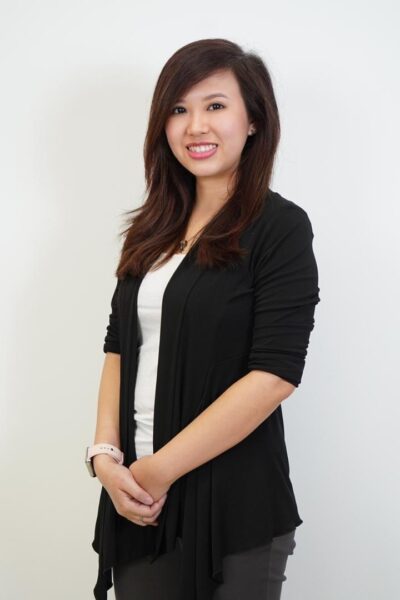
Name: Dr Chong Ho Phin
Cohort: BM114
Current Role: Senior Lecturer
Institution: IMU University
Location: Malaysia
“Then? So? What else?”
These were the three questions Dr Chong Ho Phin’s postgraduate supervisors would regularly ask whenever she presented her experimental findings.
At first, she found them challenging. She had the data, the numbers and the results in front of her, but her supervisors wanted her to go further. What did the findings actually mean? How did they relate to existing research? What could be learned from them, and what should she investigate next?
Over time, she began to understand what they were trying to teach her. Collecting data was only part of scientific research. The real work involved interpreting it, connecting the findings to a bigger picture and allowing one discovery to lead to another question.
It is a way of thinking that has stayed with her throughout her career.
Today, having returned to IMU as a Senior Lecturer, Dr Chong hopes to pass on that same curiosity to the students sitting in the very lecture halls where she once studied. Her journey, however, did not begin with a clear plan to become a researcher or an academic. In fact, it was through discovering what she enjoyed, learning from others and being willing to explore unfamiliar opportunities that she eventually found her way into the world of scientific research.
Discovering a Different Side of Learning at IMU
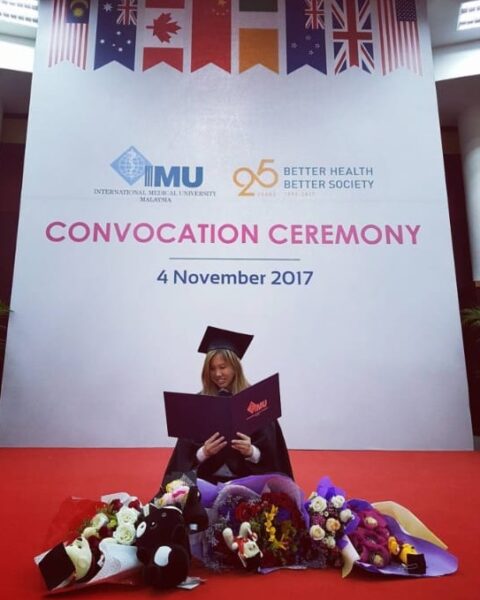
Dr Chong remembers herself as someone who was never particularly book smart. She has always been more of a hands-on learner, and it was during her final-year research project at IMU that she discovered just how much she enjoyed working in that environment.
Her undergraduate project, which examined bacterial isolates from Antarctica, introduced her to a different kind of learning. Instead of simply studying established information, she had the opportunity to investigate questions, explore possibilities and discover things for herself.
She enjoyed the freedom to ask why, how and what else could be done. It was an experience that allowed her curiosity to take centre stage and gave her a sense of fulfilment that she had not necessarily found through conventional classroom learning.
She also discovered that she enjoyed communicating her findings to others. She presented her undergraduate and subsequent postgraduate research at conferences and symposiums, eventually earning four oral and poster presentation prizes.
These experiences gave her greater confidence in her abilities as a young researcher and encouraged her to pursue further opportunities. For Dr Chong, the important discovery was not simply that her enjoyed research. It was that she had found an environment in which the way she naturally approached learning could become a strength.
Learning From Others at Duke-NUS
Her interest in research continued beyond graduation, eventually leading her to undertake a research internship at Duke-NUS Medical School in Singapore. It was an opportunity to experience a different research environment and work alongside people at various stages of their scientific careers, including postgraduate students and postdoctoral researchers.
One piece of advice she took to heart from the experience was simple: do not be afraid to ask questions. Although she had an assigned postdoctoral supervisor, she made an effort to speak to other members of the laboratory as well. She offered her help whenever she could and took the opportunity to learn from the people around her, including those whose roles were quite different from her own.
She was interested not only in their research, but also in their experiences. What had motivated them to pursue postgraduate studies? What was life as a postdoctoral researcher really like? What could she learn from their different career paths?
These conversations gave her a better understanding of what a future in research might involve and reinforced her decision to continue her studies.
For young researchers who may feel intimidated when entering an unfamiliar laboratory or academic environment, her advice is to be approachable, ask questions and be willing to learn from everyone around them.
Understanding How the Body Is Damaged, and How It Can Heal
After her internship at Duke-NUS, Dr Chong went on to pursue a PhD in Pharmacology at Universiti Malaya, where her research focused on snake venoms and toxins under the supervision of Associate Professor Dr Tan Choo Hock.
Her interest in pharmacology and toxicology was shaped by a personal philosophy that continues to guide her research:
“If I understand how the body is damaged, I can find ways to heal it.”
It is a straightforward way of explaining what drew her to the field.
Her interest lies in the field of Toxicology. Toxicology is essentially the study of how different substances can affect or harm the body, and the doses at which these effects occur. These substances are not limited to animal venoms or industrial chemicals. They include the medicines we take, the food we eat, the water we drink and the environment around us.
Understanding how these substances interact with the body is important in many areas of healthcare. It helps regulators determine appropriate safety limits, supports clinicians in managing poisoning and toxic exposures, and provides researchers with information that can contribute to the development of safer medicines and potential treatments.
For Dr Chong, there is something particularly interesting about understanding the mechanisms through which damage occurs. Once those processes are better understood, researchers can begin investigating ways to prevent or reverse their effects.
Looking ahead, she hopes to explore different areas of toxicology, including human and environmental toxicology, and investigate how these areas might be linked to drug discovery.
Why Failure Belongs in Research
Ask Dr Chong about one of the most important lessons she has gained from research, and her answer may surprise students who are accustomed to measuring their progress through correct answers and good results.
For her, failure is an important part of the process.
Experiments do not always work as expected, and research rarely follows a straight line from question to discovery. But rather than viewing unsuccessful experiments as wasted effort, she sees them as opportunities to ask better questions.
When something goes wrong, researchers have to examine what happened. Was there something they overlooked? Could the experiment have been approached differently? What can be changed the next time?
As she explains, every failed attempt is data, and every setback offers an opportunity to learn.
Her supervisors’ familiar questions — “Then? So? What else?” — forced her to think more critically about her findings. Rather than simply presenting results, she had to explain their significance, relate them to the wider scientific literature and consider what they might lead to next.
It changed the way she approached scientific investigations.
She came to understand that data, on its own, does not necessarily tell a complete story. What matters is the ability to interpret it thoughtfully and recognise what it contributes to our understanding of a particular subject.
It is a lesson she now hopes to bring into her teaching at IMU, where she wants students to understand that making mistakes and asking difficult questions are not signs of failure. They are part of learning.
Coming Back to IMU, This Time at the Front of the Classroom
Returning to IMU as a Senior Lecturer has been a rather special experience for Dr Chong.
The university is familiar, but her perspective has changed considerably.
She remembers sitting in the lecture halls as a student, listening to her lecturers and working through the material presented to her. Now, standing at the front of the classroom, she has a much greater appreciation of how much thought goes into preparing a lecture.
Every set of notes, every question and every teaching activity is carefully considered and designed to support students’ learning.
It has also given her a new appreciation of the lecturers who once taught her.
For her, coming back to IMU is more than simply taking up an academic position at a university where she previously studied. She describes it as an act of love and service to the institution that helped shape her into the person she is today.
She hopes that her own experiences will help reassure students who may not always excel in conventional academic settings. Having once been a hands-on learner herself, she understands that students can have different ways of absorbing information and discovering what they are good at.
She wants them to know that their grades do not necessarily define their potential.
Curiosity, critical thinking and a willingness to keep learning can take them much further than they might initially imagine.
Creating a Classroom Where Students Feel Safe to Ask Questions
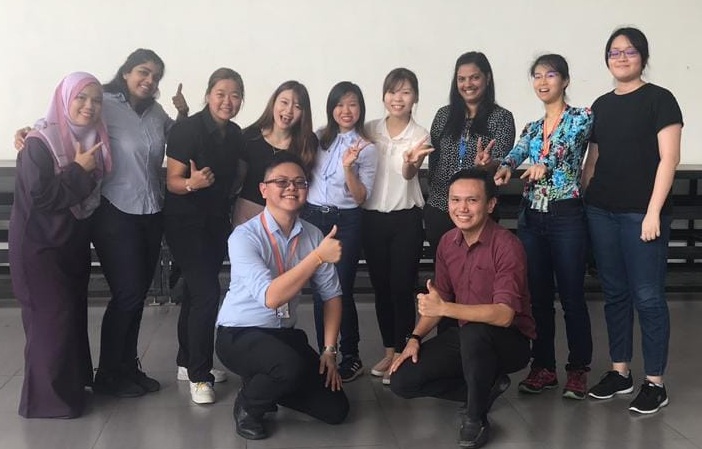
One of Dr Chong’s priorities as an educator is to create an environment in which students feel comfortable asking questions, expressing different opinions and, importantly, getting things wrong.
She believes this is particularly relevant in an era where artificial intelligence can provide answers to almost any question within seconds.
While these tools can be useful, she is concerned that students may become too dependent on obtaining the correct answer without fully understanding how or why it is correct.
For her, education should be about much more than arriving at an answer.
She wants students to engage in discussions, challenge ideas and develop the confidence to form their own judgements. She also believes debates have an important place in the classroom, as they encourage students to consider different perspectives and examine the reasoning behind what they learn.
In her teaching, she hopes to introduce the same habit her supervisors developed in him: asking “Then? So? What else?”
When students learn something new, he wants them to think about what that information means, how it connects to other concepts and why it matters in the real world.
When students begin to see how the science they learn relates to real outcomes, the subject becomes much more meaningful.
For Dr Chong, the most rewarding part of teaching will be seeing students discover what genuinely interests them and watching their confidence and understanding develop along the way.
Bringing Research Into the Classroom
Having spent several years working in pharmacology and toxicology research, Dr Chong sees teaching and research as closely connected.
Both require curiosity, critical thinking and the ability to make sense of complex information.
She believes one of the best ways to help students appreciate scientific knowledge is to show them where it comes from and how it is applied. Pharmacology, for instance, explores the mechanisms through which medicines work and the adverse effects they may produce. Toxicology examines how substances can cause harm and the factors that influence their effects.
These are not simply topics to memorise for an examination. They provide an understanding of how the body responds to different substances and why that knowledge matters in healthcare.
She is also keen to continue developing her own research portfolio at IMU. Although she considers herself relatively new to this next stage of her research career, she is eager to develop independent projects and explore opportunities in human and environmental toxicology, with possible links to drug discovery.
She is equally open to collaborating with colleagues and supporting academic activities wherever she can. Having benefited from the guidance and generosity of others throughout her own development, she hopes to be an asset to the university and grow alongside the university.
A Message to Students: Keep Asking Why
When asked what advice she would offer to current IMU Biomedical Science students and young alumni considering research or academia, Dr Chong returns to the habit that has influenced her most throughout her career.
Keep asking why.
It may sound like a simple suggestion, but she believes curiosity is what sustains researchers through the long periods when answers do not come easily.
She also encourages students not to be afraid of negative results or unsuccessful experiments. Research does not need to be perfect, and there is no need to rush through the process. What matters is being willing to examine what happened, learn from it and try again.
She also wishes she had understood earlier that learning does not end with an undergraduate degree.
She encourages students to be patient with themselves, trust the process and recognise that it is perfectly fine not to have everything figured out immediately. For those who enjoy research but are unsure where it might lead, she suggests starting small. A research project, a short attachment or even spending time reading a review paper can help students discover whether they enjoy the process.
There is no need to have an entire career mapped out before taking the first step. Sometimes, it is through these smaller experiences that a clearer direction begins to emerge.
Her final message is one of encouragement:
“Trust the process. When I was a student, I wanted to know if I answered correctly, whether my efforts would pay off, whether I was doing it ‘right’. I wish I had known that it’s okay to fail as long as we learn and do better the next time. Learning takes time, and sometimes, we have to remember to be kind to ourselves.”
For Dr Chong, returning to IMU has brought her journey back to where it began, but she sees it as the start of another chapter rather than a conclusion.
The student who once discovered her passion through a hands-on research project is now in a position to give others the same opportunities to explore, question and discover.
And perhaps that is what she hopes to leave behind as an educator: not simply students who know the answers, but young scientists who are confident enough to question them.
After all, scientific discovery begins with a question. Sometimes, all it takes is the willingness to keep asking: Then? So? What else?